Why I Back My Truck Into Parking Spaces
Backing a truck into a space isn't just a truck-guy habit. My parking-lot demonstration shows why I prefer it, where visibility matters, and when loading the bed changes the decision.
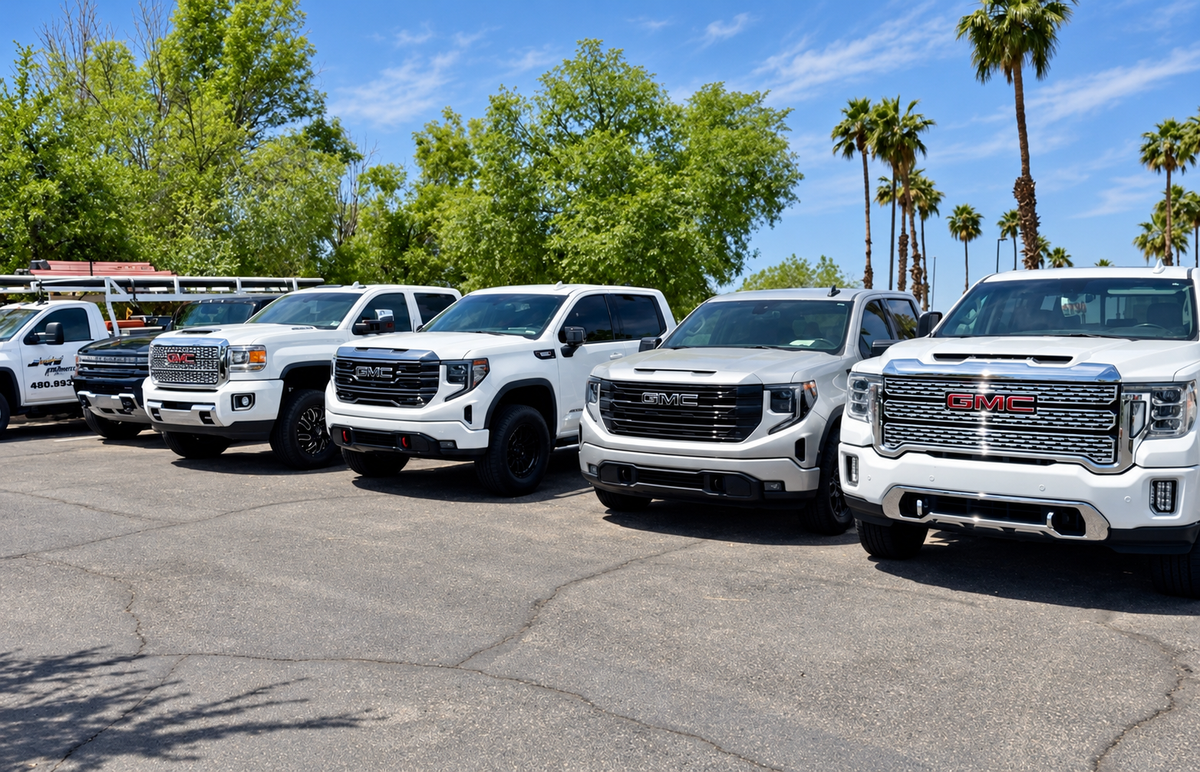
Why do truck guys always back into parking spaces? Apparently, the obvious answer is that we're overcompensating for something.
Maybe some of us are. But before we turn a parking maneuver into a personality diagnosis, let's talk about what actually happens when you try to put a big truck between two painted lines.
I made a video about this because people kept asking. I took the truck into an open lot, tried parking both ways, then went into a busy lot to show the difference with other vehicles around me. The part that matters most isn't how impressive the truck looks when it's parked. It's what happens when it's time to leave.
Watch the back wheels, not just the hood
In the open-lot demonstration, pulling in nose-first meant swinging wide, correcting, backing up and trying again. Getting the front of the truck into the space didn't mean the rest of it was going to follow neatly inside the lines. The rear wheels were still coming around behind me.
Then I backed in. In that demonstration, I could place the rear of the truck where I wanted it, watch both sides and straighten it into the space in one attempt.
This is why I brought up forklifts in the video. Think about how an equipment operator positions a load in a tight area. That comparison helped me explain the control I felt when positioning the truck backward.
A camera system helps, and mine was doing useful work in the footage. So were the mirrors. The important part was knowing where the whole vehicle was going, including the front end swinging out while I reversed.
You still have to reverse. Choose where you do it.
Here is the objection I hear: if reversing is the problem, why are you telling people to reverse into the space?
Because reversing into a space you have just approached and assessed is a different situation from reversing out into a travel lane after you've been inside shopping.
On arrival, I can look at the space and the people around it before I set up. When I return, the situation may have changed completely. A different vehicle might be parked beside me. Someone might be walking behind the truck. Traffic is moving across the very place I'm trying to enter.
In the busy-lot demonstration, that difference was obvious from the driver's seat. Backing out between parked vehicles meant trying to see around obstacles while the truck was already working its way into the aisle. Facing outward put me in a better position to assess the aisle before pulling into it.
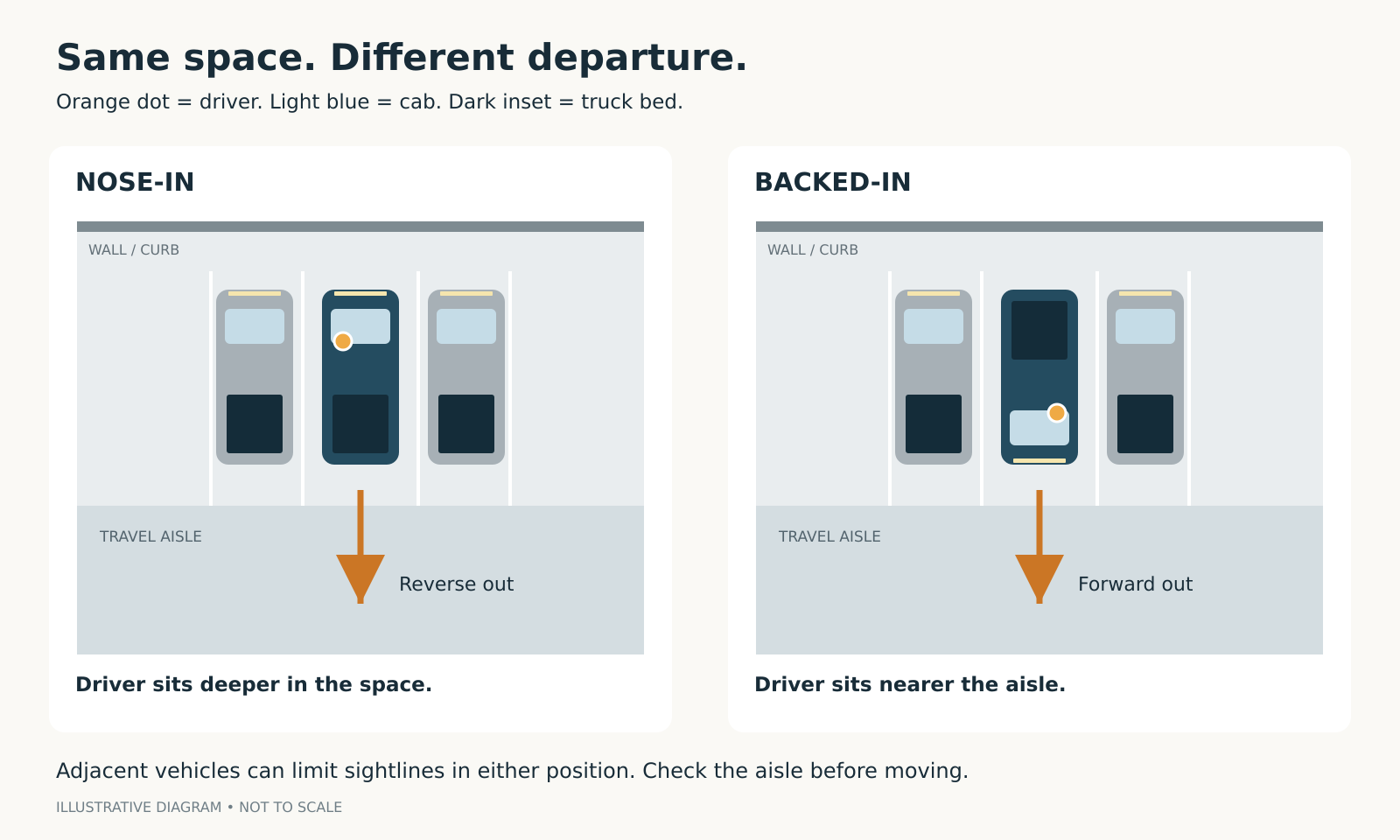
This is also the reasoning behind ICBC's recommendation to back into parking spaces: better visibility when leaving and less of the vehicle exposed to traffic. The UK Health and Safety Executive's workplace guidance makes the same practical point. Prefer arrangements that avoid reversing; where drive-through parking isn't possible, reverse parking improves departing visibility and reduces backing into traffic.
That is the benefit I'm after. It doesn't mean the aisle magically becomes clear because I parked the right way. People can move into the space while I'm maneuvering, too. I still need to look, move slowly and stop if I can't tell what's in my path.
Yes, sometimes you need to get to the bed
While making the video, I watched parking lots at Home Depot, Costco and Lowe's. I was actually surprised by how many trucks were parked nose-in.
Then there's the obvious explanation: people shop at those stores to buy things. Sometimes very large things. Backing the tailgate up to another vehicle or a wall isn't particularly clever if you need to load the bed.
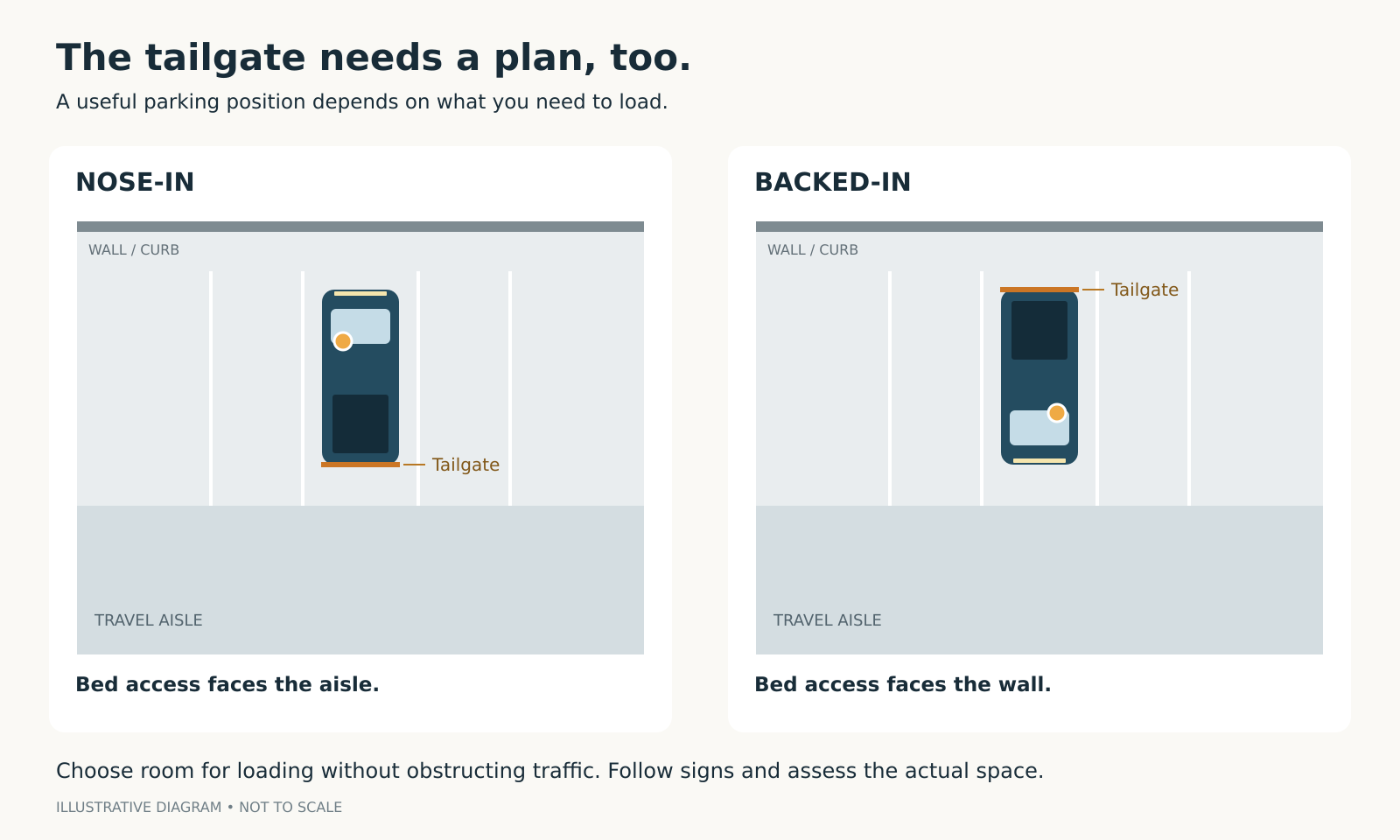
That is a real tradeoff. Choose a space that works for loading and for leaving, rather than treating the direction you park as some kind of truck-owner loyalty test. A suitable pull-through space can solve both problems when the lot's layout and rules allow it. Posted restrictions and one-way aisles still count.
The goal is less parking-lot nonsense
Spend a few minutes watching a busy lot and you start noticing how much everybody's decisions affect everybody else. Someone straddles a line. Someone swings wide. Someone waits directly where another driver needs room to turn. Now three vehicles are doing a little dance.
Backing in won't fix all of that. Neither will a newer truck with more cameras. But thinking about the exit before you park is a useful habit, and you don't need a full-size pickup to use it.
For me, the question is simple: would I rather do the reverse maneuver while I'm arriving and assessing the space, or save it for the moment I have to enter a busy aisle?
That's why I back in. If we're overcompensating, let's at least compensate for how chaotic parking lots can be.
Watch my original June 2025 demonstration below.