What the Snowflake on Your Truck Tire Actually Tells You
That mountain-and-snowflake symbol means something, but it doesn’t tell the whole story. Here’s how 3PMSF qualification differs from a manufacturer’s snow rating, and what both can tell you when choosing your next set of truck tires.
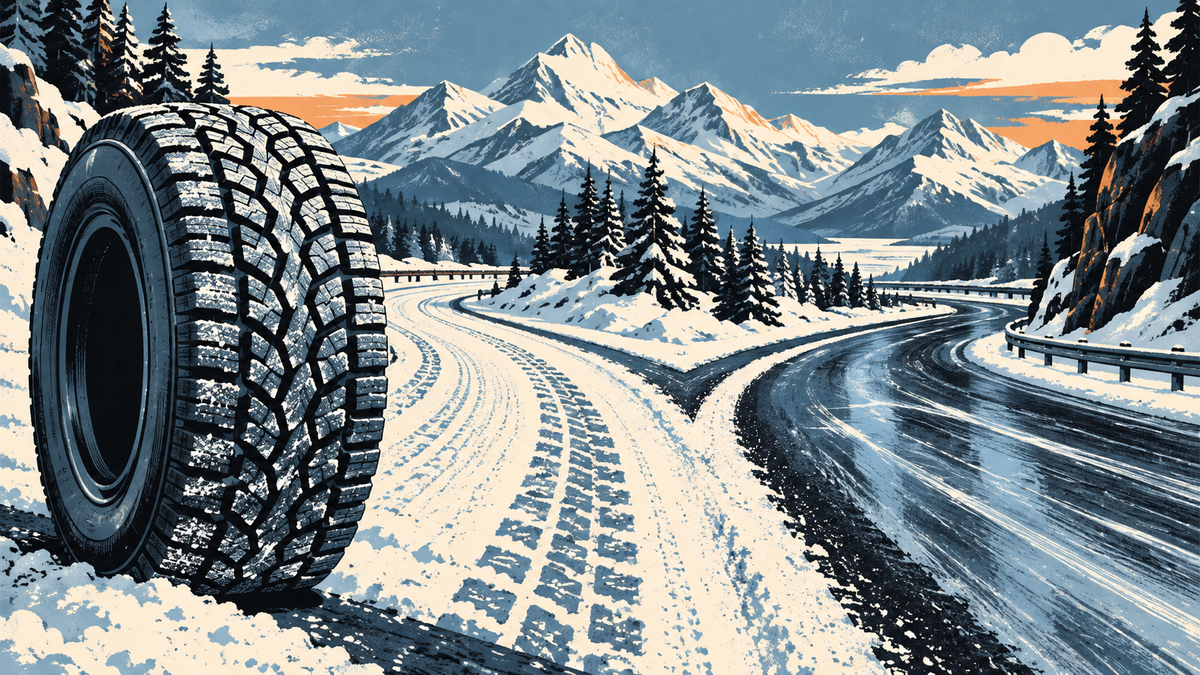
A truck tire can look ready for the apocalypse and still leave you with some very practical questions when the road turns white. How well does it stop? What happens when you turn? And what does that little mountain-and-snowflake symbol actually prove?
Those questions deserve a closer look alongside my earlier Kumho Road Venture RT coverage.
The snowflake has a specific job
The Three-Peak Mountain Snowflake, usually shortened to 3PMSF, means more than an aggressive-looking tread. The U.S. industry definition for passenger and light-truck tires ties the marking to measured snow traction relative to a reference tire.
For the U.S. ASTM traction test discussed here, Tire Rack explains that the qualification measures acceleration traction on medium-packed snow. It does not establish snow braking, cornering or ice performance. Two tires carrying the mark can still perform differently in those situations.
That makes it useful evidence with limits. It would be a mistake to dismiss it as meaningless. It would also be a mistake to read it as a guarantee that a tire will handle every winter road well. A marked all-terrain tire is not automatically a substitute for a dedicated winter tire where one is needed.
A seven out of ten is a different kind of information
This distinction matters in the Kumho comparison. Kumho's Road Venture RT page shows a snow rating of seven. The company explains that its numerical ratings compare similar Kumho tires.
That is manufacturer guidance within its own lineup, not a common scale for ranking a Kumho against a Toyo. Toyo's own performance ratings similarly describe comparisons within applicable Toyo categories. Toyo separately identifies the A/T III as 3PMSF qualified.
An internal score, a standardized qualification and a driver's experience answer different questions. None should quietly be substituted for another. My impressions cannot turn a seven on a product page into a measured braking result.
Shop for your actual winter
Before spending money, ask for comparison testing that includes stopping and turning, not just the ability to get moving. Check the exact size and specification you are buying rather than assuming every version is identical.
Then look at the tires already on the truck. USTMA's care guide emphasizes correct size, load capacity, inflation, inspection and vehicle loading. A sidewall symbol does not replace that work. A tire professional can help match the setup to the vehicle and conditions.
I still want a truck that works on the road and off it. The useful question is how the whole tire fits the job, with enough evidence to understand the compromises before the weather makes them obvious.
Disclosure: The original Kumho review disclosed that the tires were supplied at no charge, with no payment for that coverage. This article adds source-based context to that earlier review.