
AI Helps Me Write. It Doesn’t Get to Decide What I Say.
I use AI as a ghostwriter, a sounding board and a way to organize the ideas already in my head. Here's where it helps, where I push back, and why I still edit every long-form video myself.
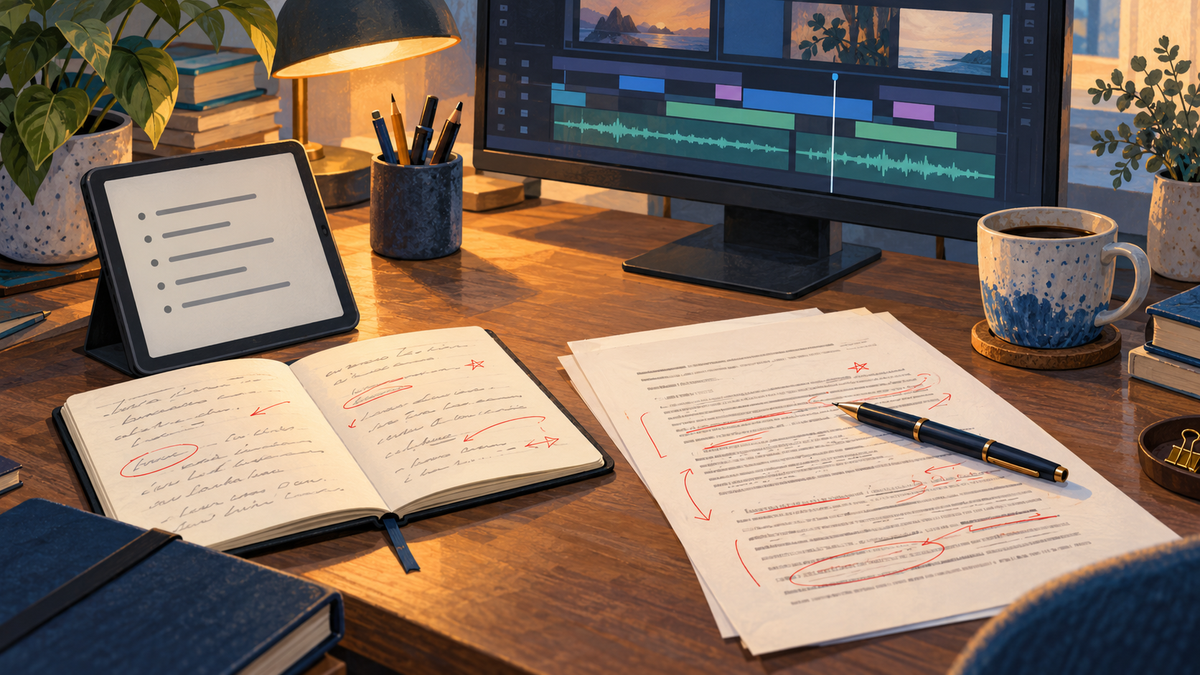
Sometimes I spend more time fixing something AI wrote than I would have spent trying to write it myself.
So I change it. I argue with it. I explain the idea again. I cut paragraphs. Sometimes I keep a useful structure and replace most of what is inside it.
That sounds like a terrible advertisement for AI. But it explains how I use it better than pretending I type a prompt, hit publish and go do something else.
There's also some context here: Gears & Gadgets isn't a dedicated media outlet with a big production staff behind it. I have a busy full-time job, and the content creation has to fit around that. Researching, filming, editing, writing, making thumbnails and keeping everything moving is simply too much for one person to do at the level I'd like. Paying a team to take it off my plate isn't an option for me.
So the choice isn't between using AI and having a fully staffed production company. It's deciding where I can get help without handing away the humanity that make this my work. I need assistance with the workload but I still need to make the decisions.
The idea still has to come from somewhere
I don't struggle to have ideas. I struggle to get all of them out in an order that makes sense to somebody else.
I can be talking about a truck, connect that to a product I used, jump to something a company is doing, and suddenly I'm explaining a completely different thing. There may be a useful connection in there. There may also be twenty minutes that don't belong in a finished piece of content.
That is where AI helps me. I treat it like an assistant and a ghostwriter. I give it the experience, the frustration, the question or the argument. It helps me organize that material into something I can work with.
Writing isn't my strongest skill. Being able to explain an idea conversationally and get a structure back is a huge advantage. I haven't been diagnosed with ADHD, but when I talk about my ADHD brain, this is the part of my own experience I'm trying to describe: lots of thoughts, lots of momentum, and a real challenge keeping one thing moving toward a finish.
AI can help hold the outline while I figure out what I want to say. It doesn't get to decide what I believe.
A convincing prototype is not a finished product
Vibe coding is a useful comparison. AI can turn an idea into something you can click through and immediately understand. That can be impressive. It can also have broken logic or security problems underneath.
Someone with the right expertise still has to work out whether the thing actually holds together. That might mean fixing it. It might mean keeping the concept and rebuilding the implementation from scratch. The prototype helped communicate the idea even if the code wasn’t worth keeping.
I think about writing the same way. A polished draft can make an idea come together while still missing my intent or hallucinating details. My job is to recognize it, revise or rebuild it. The human part is the intent, the taste and the judgment, not just a name added at the end.
AI can help me show you what I’m imagining. That doesn’t mean what it generated is ready to put my name on.
The Garmin article is a good example
My article about where Garmin could go next started with something pretty simple: I miss when a GPS sat on the windshield and was just a map.
I prefer Garmin's map experience. But with CarPlay and Android Auto already in the conversation, I wanted to explore a different direction. What if Garmin put more of that experience into an app, then offered one useful standalone display for an older car whose owner doesn't want to replace the head unit?
That was the idea I wanted to discuss. The writing needed to invite people into that question.
When the draft kept stopping to explain what we weren't claiming existed in a current product, I pushed back. We had already established that we were imagining a product direction. I wanted context and a compelling discussion, not defensive paragraphs every time the article got interesting.
That is editing. I needed the reader to feel the question that made me want to write the article in the first place.
The same thing happened while planning a Kumho interview. I didn't want a commercial. I wanted more humanity and a conversation about brand recognition, because my own perception had changed after a ride-and-drive. An outline built around “Who is Kumho?” missed that distinction. I had to explain why the question mattered before the questions themselves could get better.
The reMarkable is keeping me on track
If you see me holding my reMarkable in a video, don't assume I'm reading an AI-written speech.
What I have is a handful of bullet points. Here are the things I meant to cover. Here is the question I don't want to forget. Here is where I was going before I took a detour.
A full script isn‘t an option, it isn’t how I want to talk to you. I want room to explain something naturally, follow a useful thought and sound like myself.
The bullet points help keep that freedom from turning into an hour of footage that has to become a ten-minute video. That extra footage costs me many more hours later. A little structure before I hit record can save a lot of cleanup without turning me into a teleprompter reader.
The long-form edit is where the video becomes mine
I edit my long-form videos myself in Final Cut Pro on my Mac. I have never paid an editor to do that work for me.
That isn't a statement that other creators shouldn't hire editors. It's an explanation of why my process works the way it does. My filming can be sloppy. A thought might not come out cleanly the first time. I might find the useful part of an explanation halfway through saying it.
When I sit down to edit, I'm deciding what I actually intended to share. Which sentence says it properly? Which tangent adds something? Which part was me working through a thought rather than communicating it?
Those choices are part of the creative work. An edit can change the meaning of what somebody said. I want to be the person making those decisions about my own videos.
For my long-form content, that stays with me.
Yes, I use AI for thumbnails and Shorts
I also use AI to help create thumbnails. The same standard applies: the image has to fit the video and the idea I'm trying to communicate. A tool helping make the packaging doesn't give me permission to promise a story the video doesn't deliver.
For an Avalanche head-unit thumbnail, I pushed back because the result looked like a generic AI thumbnail and didn't look like me or the actual head unit. I supplied real reference assets instead. Looking polished isn't enough if the person and the product are wrong.
Shorts are another place I use it. I use AI to turn my own long-form material into short-form edits, because, honestly, I don't particularly enjoy making short-form content.
I would rather spend my creative energy on the longer video. I still review the result, because a short clip can lose the context that made the original point fair.
A two-line email doesn't need a corporate makeover
I've noticed the same tradeoff in my professional life. Sometimes a routine email reads like generic AI copy: polished, formal, and missing the personality of the person I know. That isn't proof of how it was written. But if I'm just thanking someone, I'd rather say it myself in two normal sentences than dress it up in corporate language.
I try to use AI where the communication is actually difficult. Something politically sensitive internally may need a careful look at how the wording could land. An incredibly complex idea may need organizing before it becomes a useful executive briefing. Working through those angles can help me see what someone might misunderstand or what they actually need to make a decision. I may spend just as long editing, but if the communication is clearer and more considered, that time was useful.
The goal is better communication, not making every message sound important.
YouTube opened the door. It didn’t hand everyone talent.
I see a parallel with what YouTube did to the Hollywood model. You no longer needed a studio to decide your idea deserved an audience. You could make something and put it out there. MySpace and the spread of MP3s belong in that same conversation about opening up how people create, share and discover work.
None of that made everyone good at it. Access to production and distribution is not the same thing as having something worth saying. I think AI could have an even bigger impact, but it still doesn’t hand someone taste, conviction or a reason for an audience to care.
That’s why I don’t see generic AI content as the inevitable future of YouTube. When I open a video that feels like farmed clips stitched together under a generic voiceover, I click off quickly. I’m not interested. It isn’t voiceover itself that bothers me. It’s feeling like nobody had a point beyond getting me to watch.
I believe people will keep looking for people: a perspective they trust, an experience they recognize, a personality they want to spend time with. Algorithms shape what reaches us, but viewers still decide what deserves their attention. Easier production doesn’t settle that question. What someone does with the tools is the interesting part.
What I mean when I say I don't want slop
When I say I want zero slop in my published work, I'm talking about the standard I hold it to. I don't want filler, fabricated experiences, unsupported claims or a polished paragraph that I wouldn't stand behind if somebody asked me about it.
That standard takes work. Sometimes the AI makes the work easier. Sometimes its first attempt gives me a very clear example of what I don't want.
The distinction that matters to me is whether a creator is still doing the thinking, checking and choosing. You can't know somebody's whole process just by looking at a finished piece. But I can explain mine: AI is my assistant. I am responsible for what carries my name. Owning the finished piece doesn't mean I personally originated every sentence. It means I stand behind the words I choose to publish, check the claims, and correct mistakes when I find them. I don't get to blame the tool for something I put my name on.
That includes this article. I used AI to help organize and draft it from my own explanation of how I work. I'm not going to hide that while writing a post about transparency.
The point of using a ghostwriter is to help me express my ideas. If the finished work stops sounding like something I mean, the process has failed, no matter how quickly it got written.