
Normal-Looking Motorcycle Boots don't have to look goofy.
I spent $500 on Indie Ridge boots and gloves. Here’s how they rode, what the four safety ratings mean, and the tradeoffs to understand before buying.
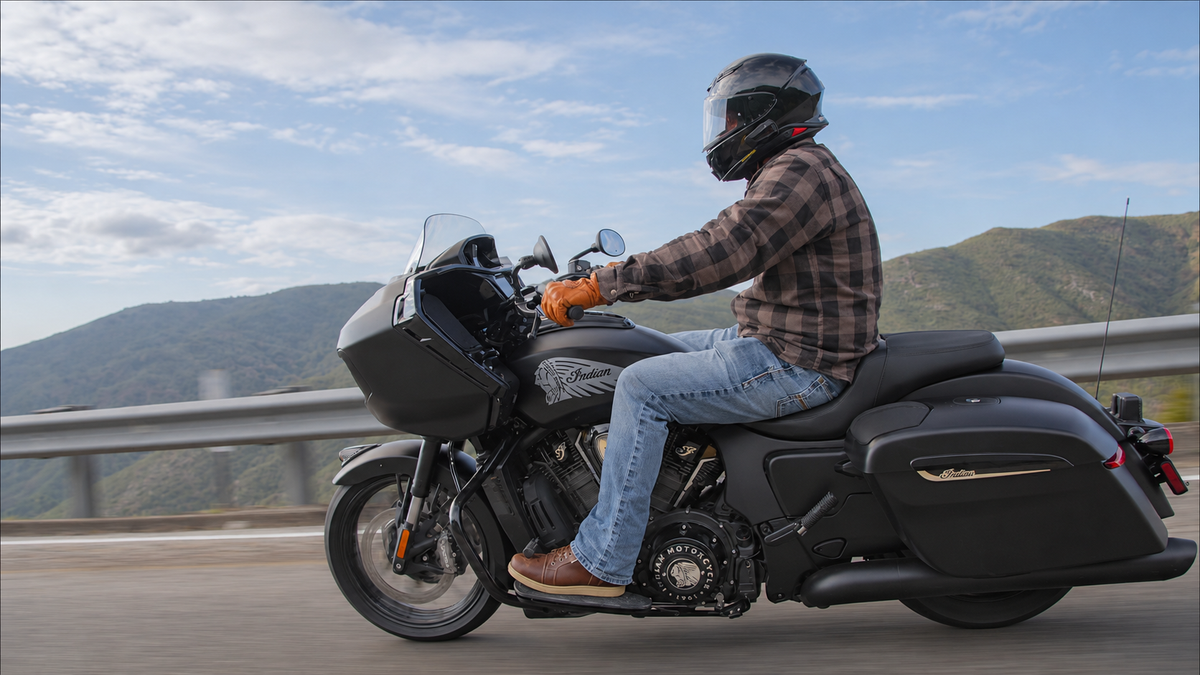
I spent $500 of my own money on several pairs of Indie Ridge boots and gloves because I wanted motorcycle footwear that didn't look ridiculous when I got off the bike.
Somewhere along the way, motorcycle boots became ugly leather boots with giant rubber patches and visible armor that scream “LOOK AT ME, I RIDE A MOTORCYCLE.” I’m fine with an off-road boot when I’m riding off-road. I don’t want that look walking into work or a bar.
Protection without the motorcycle costume
Getting that balance right takes more than hiding some padding. The upper has to resist wear and cuts, the boot has to resist sideways crushing, and you still need to walk and operate the bike. That’s why the safety label matters more than how armored a boot looks.
Indie Ridge’s current Apache and Armstrong listings report EN 13634:2017 ratings of 1/2/2/2. Those are four separate results, in a specific order. Here’s what you’re actually buying.
1. Height: Level 1
The first number describes how much of your lower leg the boot covers. These are above-the-ankle boots in the standard’s lower height category. Level 2 requires a taller upper, with the minimum measurements changing by shoe size. The practical compromise is straightforward: you get a shorter boot that works under jeans, but less coverage up the leg. A higher score in the other categories doesn’t add that missing height.
2. Impact abrasion resistance: Level 2
This measures how well the upper materials resist wearing through against an abrasive surface. Level 2 requires at least 2.5 seconds in one test area and 12 seconds in another, compared with 1.5 and 5 seconds at Level 1. Different areas have different requirements. For a buyer, it’s evidence of a tougher abrasion standard, not permission to slide down the road for 12 seconds. Road surface, speed and the way you land aren’t controlled like a laboratory test.
3. Impact cut resistance: Level 2
A blade strikes a material sample, and the test measures how far it penetrates. In the more demanding Area B test, Level 2 limits penetration to 15 mm, compared with 25 mm at Level 1. The Area A limit is the same at both levels. That tells you the upper meets the higher impact-cut requirement. It doesn’t mean the boot is cut-proof or that its sole has been tested against stepping on nails.
4. Transverse rigidity: Level 2
This is resistance to the boot being squeezed sideways across the foot. The test compresses the footwear and measures the force needed to deform it. Level 2 requires at least 1.5 kilonewtons, compared with 1.0 at Level 1. I care about this because soft, comfortable footwear can look substantial without resisting that sideways collapse. The rating gives you a tested comparison, but it isn’t a motorcycle-weight limit or an ankle-twist rating.
SATRA explains the four markings, and iXS’s EN 13634 guide lists the test thresholds. These are laboratory results, not a guarantee against injury. Waterproofing and optional ankle-impact protection have separate markings. Indie Ridge also revises its boots between batches, so check your exact pair’s label rather than assuming my earlier boots have today’s specifications.
A last-minute stop at Indie Ridge
I was heading to an Indian Motorcycle press event and needed waterproof boots. I sent Indie Ridge a last-minute DM, and Steve Lauria, the owner and founder, opened the doors so I could stop by.
There’s something infectious about talking to someone who’s creating something they’re passionate about. Plenty of people make boatloads of money selling things they couldn’t care less about. Steve came across as someone who cared more about the people and the product than the money. That’s special, and I left impressed by how much thought he put into his work.
Now, to be clear, this is not a storefront, and that kind of visit shouldn’t be expected. I was grateful they answered my message and made time for me. I was happy to pull out my wallet while talking shop with someone who clearly loved what he was doing.
This isn’t sponsored, and I have no affiliate relationship with Indie Ridge. I just really like them.
What the miles showed me
Apache: I rode all day in the rain, and they lived up to the waterproof claim. That was the problem I needed them to solve for the press event.
Armstrong: I wanted something that breathed for riding here in Phoenix. The ventilation blew me away. On the road, the airflow felt closer to a sneaker than a motorcycle boot. That’s the pair I’d look at for airflow, rather than expecting the waterproof Apache to do the same job.
Stiffness and wear: They’re still motorcycle boots. Moving my ankle to use the heel shifter felt different from my cowboy boots, so don’t confuse the sneaker-like airflow with sneaker-like flexibility. The Apache also picked up a scuff and visible shifter wear after a day. Expect the leather to show use. Those initial rides told me about comfort and weather performance, not years of durability.
The gloves deserve a look, too
The Golden Glove felt great as soon as I put it on. The airier Powersports glove impressed me too, especially its longer Velcro closure. I’m picky about gloves, and both were purchases I was glad I made.
I’ve logged miles in this gear, and I love both the boots and the gloves. If you want everyday riding boots that look normal off the bike, Indie Ridge deserves a look. Choose the version for your weather, understand the shorter coverage, and expect a protective boot rather than a soft sneaker.


