
The BEST Off-Road Upgrade That Doesn’t Bolt Onto Your Machine
More horsepower is exciting. Having a usable place to ride matters just as much. A new round of OHV grants puts money toward the less glamorous side of the ownership experience.
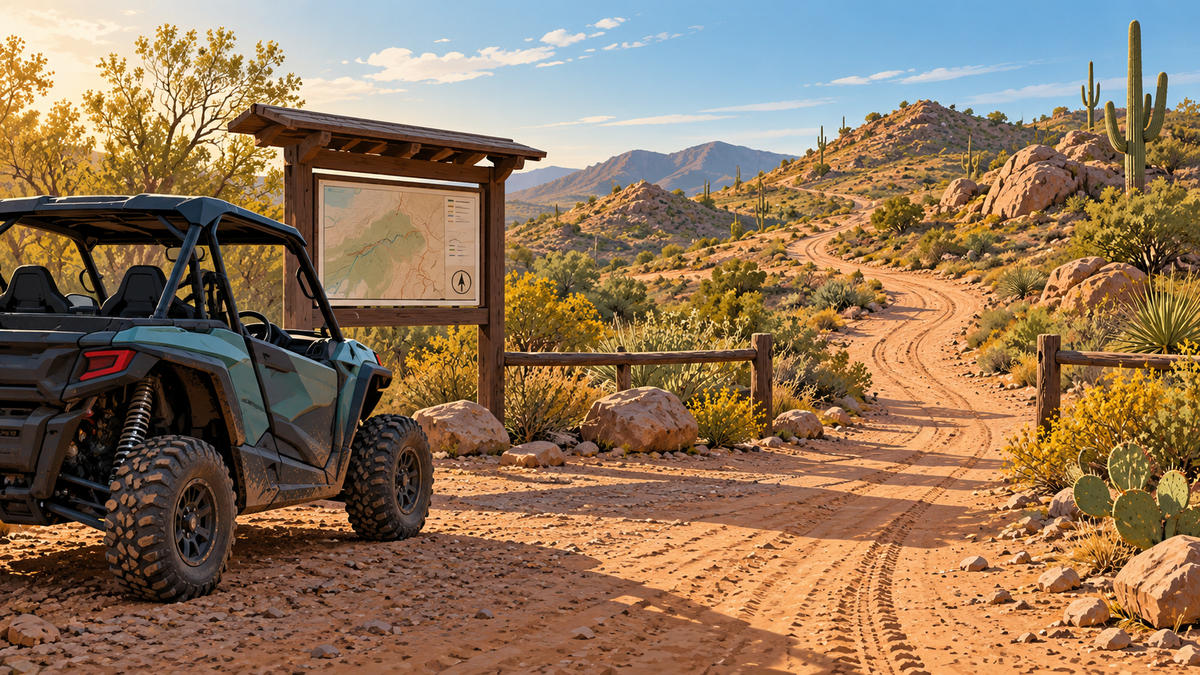
It is easy to get excited about more horsepower, better suspension and the next machine that can do something ridiculous. I cover that stuff because I enjoy it.
But there is a less glamorous question underneath all of it: where are we actually going to ride?
A machine can get better every year while the experience around it gets worse. Confusing trail entrances, neglected facilities and poor information are not problems you fix with a bigger engine. That is why a recent announcement from Polaris caught my attention for something other than a new vehicle.
Money for the places that make riding possible
On October 22, 2026, Polaris and the Foundation for America’s Public Lands announced more than $500,000 in grants for ten OHV projects across six states. The Foundation is the Bureau of Land Management’s charitable partner, and the projects concern recreation areas on BLM-managed land.
The work is a mix of access, facilities, information and stewardship. That combination matters. A better riding area is not necessarily one with more miles to drive. Sometimes it is one where the entrance makes sense and visitors understand where they belong.
The Foundation’s project breakdown includes replacement gateway signs in Arizona, safety training and cleanup support at Imperial Sand Dunes, and planned connector and motorized-route work at Horsethief Recreation Area in Montana. Other projects address trailhead information and campground infrastructure.
These are announced grants for work to be done, not a report that every improvement is already finished. I would like to see the follow-through get as much attention as the announcement.
This belongs in the ownership conversation
We spend a lot of time comparing the machines. The practical value of owning one also depends on the places available to use it, the people maintaining those places and whether the experience works for everyone sharing them.
I think manufacturers should have a stake in that. Selling the machine is only one part of supporting the activity. Helping fund the places that make ownership worthwhile is a useful investment, and I would rather see that money do tangible work than disappear into another slogan about adventure.
That does not mean a grant earns a company a free pass on its products. It means this particular investment deserves attention on its own merits. The useful question is what riders and the surrounding communities actually get from it.
A map is the beginning, not the permission slip
There is a rider side to this, too. The BLM tells visitors to observe posted signs, respect private property and check applicable state requirements. Utah’s recreation agency makes another practical point: a route appearing in a mapping app does not establish that it is open to your vehicle.
Before loading up, check the managing agency’s current route information and restrictions. Better signs help, but they cannot replace knowing where you are going.
I am still interested in the next impressive machine. I also want the places we use them to deserve some of that excitement. More capability is fun. A usable place to enjoy it is what turns the purchase into an experience.
Earlier side-by-side coverage
My RZR Pro S video below explores the appeal of side-by-sides. It predates this grant announcement and provides context for the ownership conversation.