Harley vs Indian: Why Riders Matter More Than Corporate History
I spent time with Indian Motorcycle during the Chief Vintage unveiling and “125 Years Strong” celebration, exploring why Indian’s history, hiatus included, challenges the fixation on continuous production and why riders and culture matter more than corporate timelines.
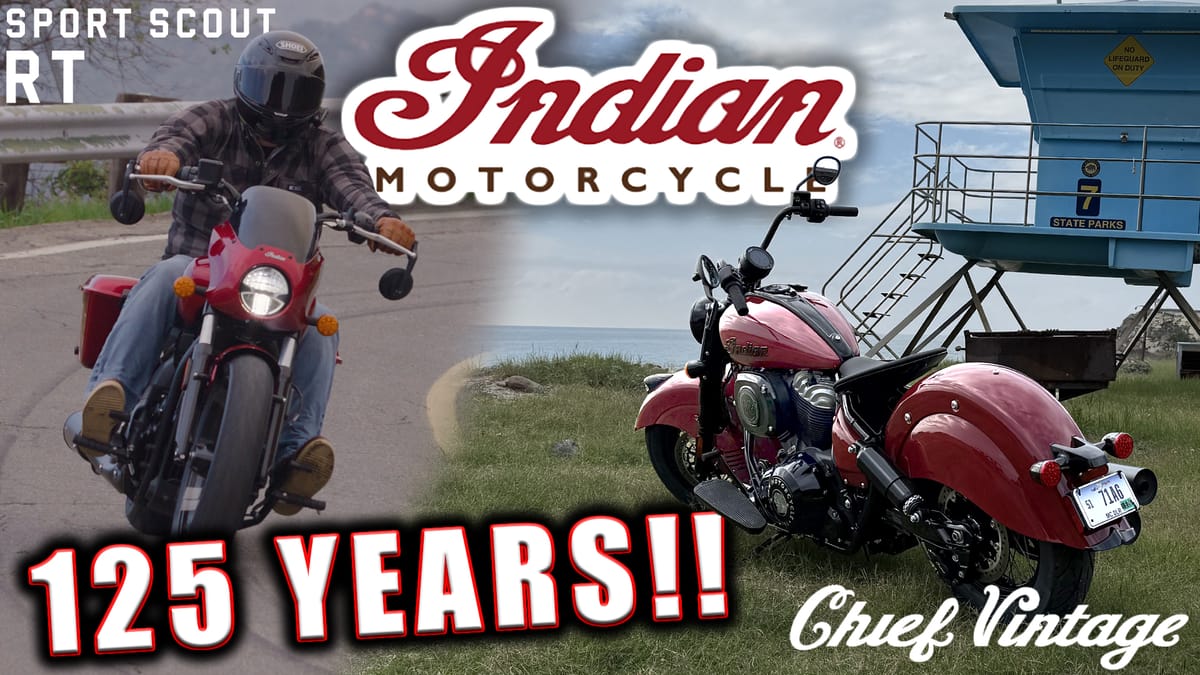
I spent time this past week with Indian Motorcycle during the unveiling of the Chief Vintage alongside their "125 Years Strong" celebration. It wasn’t just another press ride or product drop. It was one of those moments that forces a bigger conversation, the kind a lot of people seem weirdly uncomfortable having.Indian framed the year with their “Never Finished” campaign, built around the idea that history is shaped by people, innovation, and persistence. Their press release leans into that idea by celebrating Indian’s founding in 1901, its innovation, dominance, disappearance, and return. Not hiding the gaps. Not pretending the timeline was clean. Acknowledging that history is complicated and unfinished.
“Reaching 125 years is a historic milestone is a true testament to the riders who refused to let the spirit of Indian Motorcycle fade through a 60-year hiatus and to those who helped fuel the brand’s return more than a decade ago.”
And that’s where the internet absolutely looses its mind.
The moment Indian says “125 years,” a certain segment of Harley loyalists comes charging out of the woodwork with the same argument every single time: continuous production. Factory doors. Addresses. Corporate paperwork. As if those things alone define the soul of motorcycling.Here’s the problem with that framing.Continuous production is not the definition of motorcycle history. Riders are. People are. Loyalty is. Corporate IP exists to support that reality, not replace it.
The History Nobody Likes Talking About
Indian Motorcycle was founded in 1901. That’s not up for debate. They shut down in 1953. That’s also not up for debate. What often gets lost is everything in between and everything after.Riders didn’t disappear. The bikes didn’t vanish. Indian machines were restored, revered, and carried forward by enthusiasts for decades. The nameplate stayed alive culturally long before it returned commercially. That matters.Now, to be fair, Indian doesn’t dwell on those hiatus years either. The gap is acknowledged, but it isn’t deeply explored in marketing. That’s understandable. Brands exist to sell motorcycles, not host history seminars on their toughest years. But acknowledging a gap honestly is very different from pretending it invalidates everything that came before or after.And this is where nuance really matters, because Harley’s story isn’t nearly as clean as many want to pretend.
Harley’s Rocky Years Don’t Get a Warm Embrace Either
Harley-Davidson did not survive purely on grit, purity, or destiny.For 12 years, AMF owned the Harley IP and produced the motorcycles. During that same period, the Harley logo was slapped on everything from motorcycles to golf carts to snowmobiles. That wasn’t some sacred uninterrupted lineage. It was a corporate purchase and exploitation of valuable brand IP.Later, Reagan-era tariffs protected Harley from Japanese competition at a time when the company was already struggling and falling behind. Without that government intervention, there’s a very real argument that Harley would not have survived the 1980s intact, if at all.And yet, Harley doesn’t exactly embrace those years either. They don’t lead marketing campaigns with AMF logos or tariff timelines. Those chapters are quietly minimized, smoothed over, or reframed as inevitable stepping stones.That’s not a criticism. It’s just reality.Both brands curate their past. The difference is that one brand’s gap gets weaponized against it, while the other’s external assistance gets treated like divine intervention.
The Alternate Timeline Nobody Wants to Admit
There is a very real alternate timeline where this story is completely inverted.If AMF hadn’t bought Harley, or if tariffs hadn’t shielded them, Harley could, and very likely would have, died instead. Indian’s IP could have been acquired by AMF or some other major corporation in 1953, just as Polaris later acquired it. Indian could have been relaunched, and 16 years later, while Harley was already deep into aging product cycles and struggling, Indian could have steamrolled them.In that world, we’d be celebrating Indian’s “continuous production” and talking about Harley as the legendary brand that disappeared.Would that make Indian’s history more valid?Would that make Harley loyalty today cheaper or less real?Of course not.It would be the exact same situation, just with the logos flipped.That’s why this entire argument collapses under even light scrutiny.
Why the “Continuous Production” Argument Misses the Point
When people cling to factory addresses and uninterrupted production runs as proof of superiority, what they’re really celebrating is corporate acquisition, fiduciary responsibility to shareholders, and government intervention.None of that is cool.None of that is badass.None of that is why most of us ride motorcycles. And if it is for you, you may be more invested in Corporate America than riding culture. Riding might not be the best place to park your money. ETFs, bonds, and a sensible blazer might suit you better.What actually makes a brand matter is whether people care enough to ride it, fight for it, restore it, race it, and carry it forward when corporations fail them.By that definition, Indian never stopped being Indian.If anything, disappearing and clawing its way back into relevance makes the brand more interesting, not less. The fact that so many people feel compelled to aggressively defend Harley’s corporate continuity says less about Harley’s strength and more about how threatening Indian’s resurgence feels.You don’t get that kind of reaction unless mythology is being challenged.
Why Indian’s Future Might Be Even More Interesting Now
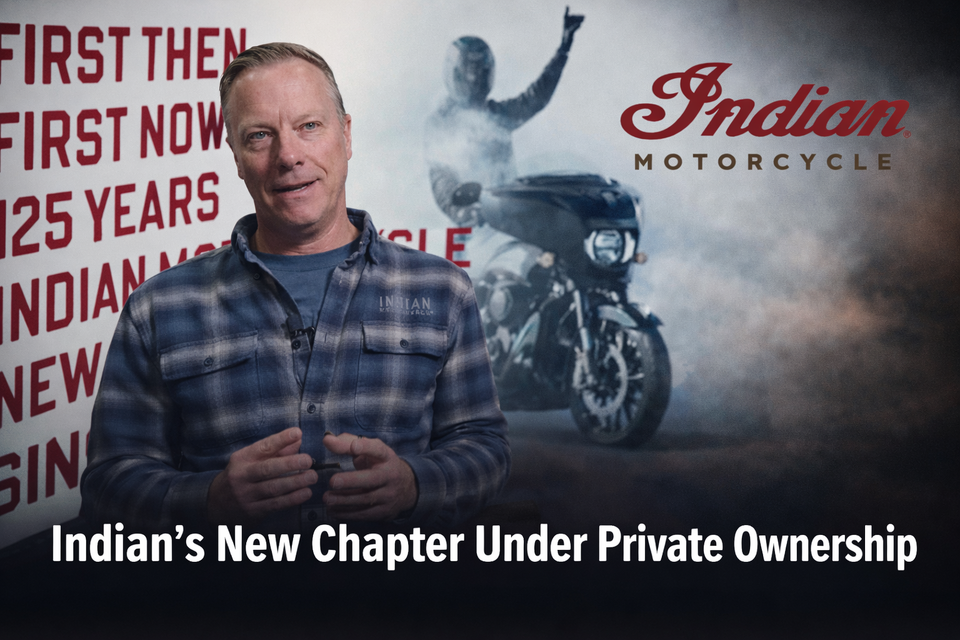
If anything, the recent shift in Indian’s ownership structure only reinforces why this conversation matters.Polaris selling a majority stake of Indian Motorcycle to Carolwood LP and appointing Mike Kennedy as CEO is, in my opinion, far more interesting than Indian remaining just another line item inside a massive public corporation.Kennedy’s background spans Harley-Davidson, BRP, Vance & Hines, RumbleOn, and dealer-level operations. That’s not spreadsheet-first leadership. That’s industry-literate leadership. Someone who understands riders, dealers, aftermarket culture, and how brands actually live in the real world.And more importantly, Indian is now a private company.There is nothing cool about public companies chasing quarterly earnings and shareholder optics. Private companies are scrappier. They can take risks. They can think long-term. They can build culture instead of optimizing PowerPoint decks.If history has taught us anything, it’s that motorcycles don’t thrive under corporate perfection. They thrive under conviction.
My Time With Indian This Week
Riding the Chief Vintage during the 125th celebration made all of this feel real in a way internet arguments never do.Indian isn’t pretending the past was perfect. They’re using it as a launchpad. The bike itself reflects that mindset. Old soul. Modern execution. No cosplay. No apology.The “Never Finished” campaign isn’t about pretending nothing ever went wrong. It’s about acknowledging that history is messy and choosing to keep moving forward anyway. That’s something riders instinctively understand.Motorcycling has never been about corporate perfection. It’s about the people who show up, even when things fall apart.
The Real Takeaway
Ride what you like. Love what you love. Celebrate your brand.Just don’t confuse marketing with reality, and don’t pretend corporate paperwork is the same thing as culture.History is longer than a snapshot in time. Brands rise, fall, get bought, get saved, and get rebooted. Riders are the constant.And right now, the fact that Indian being back triggers this much defensive energy tells me one thing very clearly.Indian isn’t just back.It’s relevant.And that might be the coolest thing of all.