A New Era for Indian Motorcycle — And Why This Feels Bigger Than Private Equity
When Indian Motorcycle’s new CEO Mike Kennedy took the stage after the Carolwood acquisition, the internet focused on private equity and cheaper bikes. I walked away thinking about something else: leadership, clarity, and a brand unapologetic about what it is and what it is not.
When the Carolwood acquisition of Indian Motorcycle was announced, I had reservations. New ownership always brings uncertainty. Writing a comment online is easy. Committing your own money during a transition is different.
That hesitation mattered because when Polaris owned Indian, I was very close to trading in my Harley for one, not for content or clicks, but as a real purchase decision. The only thing that stopped me was the same financial commitment every consumer has to weigh. If anything, as a content creator, pivoting toward Indian would have been the risk. It is a smaller niche within an already small V-Twin niche, and anyone who understands content creation knows that narrowing your audience inside a niche industry is rarely the safe move.
I have ridden nearly every current Harley and every current Indian. My opinions are based on seat time, not brand allegiance. In several key areas, I felt the Indian product was stronger, and I was prepared to put my own money behind that belief.
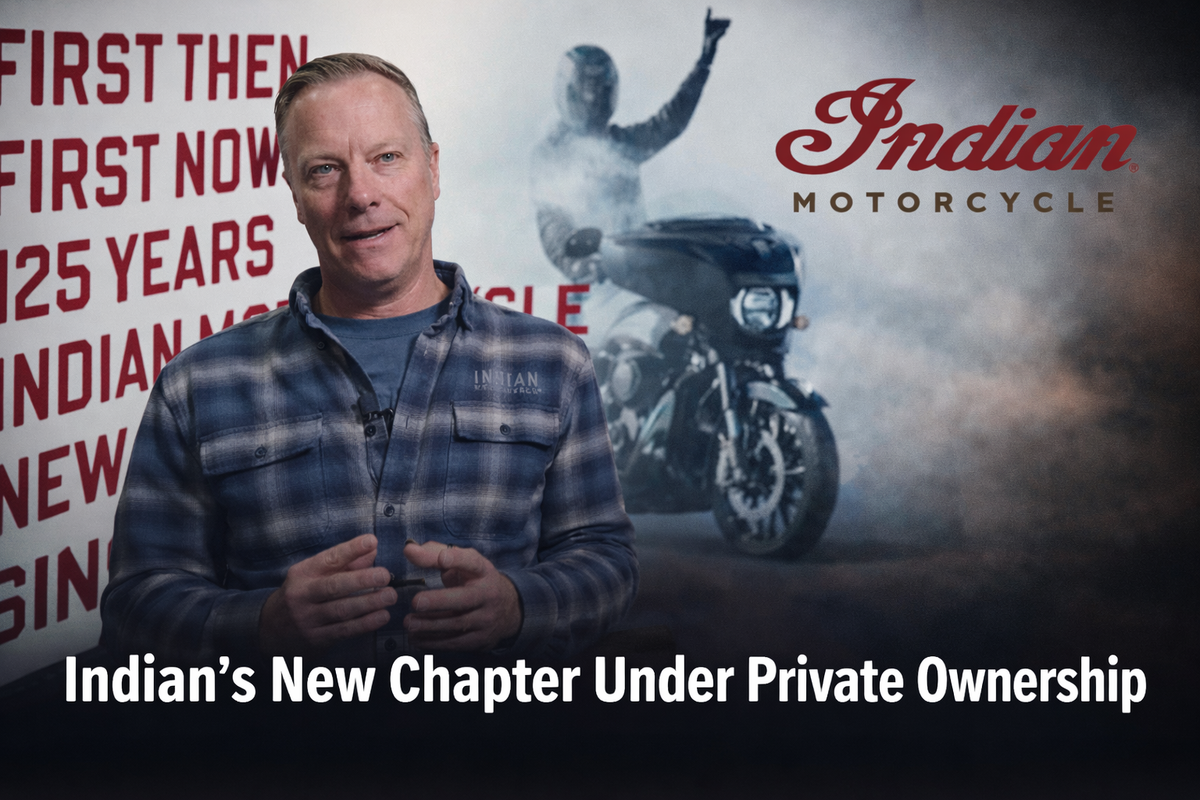
So when I attended the recent Indian Motorcycle press conference where Mike Kennedy stepped in as CEO following the official close of the Carolwood LP acquisition, I entered the press conference very skeptical.
After sitting in that room and listening to Kennedy speak, I walked away feeling excitement rooted in intention and clarity of identity. Confidence without apology. The kind of rebellion I expect from an American V-Twin manufacturer. A clear direction. No need to be everything to everyone.
And for the first time since the acquisition was announced, I am actively planning on making that move again sometime this year.
This Press Conference Felt VERY Different
I have watched enough corporate press events to recognize a marketing-crafted message delivered at arm’s length, presented to a room full of handpicked people unlikely to challenge a narrative.
This was not that.
Kennedy came across as a rider. He did not speak about motorcycles as units and margin, but as emotional machines tied to identity and culture. He talked about the product line, doubling down on baggers and touring bikes, introducing trikes, and building motorcycles that “only Indian could make.”
It felt intentional. It felt guided by someone who has been part of this industry since 1989.
Simplifying the Line and Picking a Lane
One of the strongest signals from the press conference was simplification. Indian isn't trying to be everything to everyone. The strategy is sharp. Fewer distractions. More clarity.
They are leaning into premium American-made V-Twin motorcycles, into baggers and touring platforms, into craftsmanship and brand-defining products. They are choosing depth over sprawl.
That upset some people who want Indian to build cheaper bikes or bring back the FTR. I have even seen calls for an ADV bike to rival the Pan America, and for the record, I absolutely love the Pan Am. But here is the uncomfortable truth. Indian and Harley are premium American V-Twin big bike brands. Their identities are built on aspiration, craftsmanship, and presence. Competing in high-volume, low-margin entry-level segments or niche off-road categories, no matter how rad the product might be, does not align with that DNA. Chasing it risks blurring the very identity that makes those brands desirable in the first place.
And let’s be honest about the entry-level argument. The American who buys a $5,399 Honda Rebel is just as likely to aspire to graduate into an American bagger as they are into a Gold Wing. Entry-level riders tend to look up-market over time. That aspiration ladder already exists. Indian does not need to build the bottom rung to benefit from it.
Kennedy also made the point that the used market already satisfies lower price entry. He is not wrong. There are endless used Harleys and Indians available for riders who want into the culture at a lower cost. He also acknowledged something that does not get said often enough. It is okay if the brand is not right for every rider. Not everyone wants, or is ready for, a bigger V-Twin. They understand that. Indian does not have to contort itself to capture every possible entry-level buyer. Sometimes focus means accepting that you are not for everyone.
The ADV conversation follows a similar pattern. The Pan America is an impressive machine, but it is also the first type of platform that gets scrutinized when Harley needs to simplify manufacturing and double down on its core. It sells, but not at a level that defines or sustains the brand. In tougher cycles, it can shift from strategic expansion to manufacturing distraction. We have already seen how quickly initiatives like LiveWire can become complications when they drift too far from foundational identity.
The only place I slightly diverge is on micro electrification. I believe in the Super73 and Razor collaborations. Electric bicycles and neighborhood cruisers are everywhere in suburban America. My daughter rides an eFTR Jr. I own a Super73 Indian eFTR Hooligan 1.2. I have watched brand imprinting happen in real time.
That is a future rider pipeline.
Seeing the Forest Through the Trees
Kennedy also directly, and forcefully, addressed the narrative that American V-Twin sales are in decline when he was challenged on it. The passion in his response was noticeable. Yes, the overall market may be down. But Indian’s market share is increasing.
If the overall pie is shrinking while your slice is growing, something deeper is happening. Maybe riders still want American V-Twins. Maybe they are just less willing to spend serious money on stale product cycles. Maybe they are responding to better product, unique designs, clearer positioning, and a new authenticity.
What stood out was that he seemed genuinely frustrated by the framing of the question itself. If he knows the data and sees market share climbing, why is the strategy being questioned as if Indian is doing something foolish? Why not ask why they are leaning into what is working instead of assuming they should chase FTR revivals or cheaper bikes?
He had already fielded multiple questions about entry-level models and niche segments, as if the media knew better than the numbers in front of him. His explanation was clear. The core American V-Twin market is still large enough and responsive enough to justify focus. Ignoring that to chase niches within niches does not make strategic sense.
If Indian is gaining ground while the other major American brand is contracting, riders are reacting to something real. Kennedy seems to understand that nuance. That is seeing the forest through the trees rather than reacting to a single headline statistic.
This Is Not a CEO Learning Motorcycles on the Job
Kennedy has been in the powersports industry since 1989. He led Vance & Hines. He ran RumbleOn and RideNow Powersports. He spent more than 25 years in senior leadership roles at Harley-Davidson. He understands OEM strategy, dealer networks, aftermarket culture, and rider psychology. This is not someone learning motorcycles on the fly.
In a previous video, I argued that CEOs are often figureheads. The nuance got lost and I scrapped it. What I meant was simple. When you appoint someone to check boxes, satisfy optics, or calm investors, you tend to get exactly that, a symbolic leader who manages perception more than direction. But when you hire someone with deep industry roots and real passion for the space, you get conviction. You get clarity. You get decisions that feel grounded instead of manufactured.
There is a significant leadership contrast happening right now. Indian appointed a CEO deeply rooted in motorcycles and powersports. Harley-Davidson’s recently appointed CEO came from consumer retail and entertainment roles. That is not criticism but it is very different.
One CEO has deep industry experience and is ready to pounce on day one.
The other is a corporate operator, ready to run earnings calls from day one.
Those appointments shape culture, risk tolerance, and ultimately product. Right now, Indian feels like it is doubling down on being a motorcycle company first. Harley feels like it is doubling down on being a publicly traded company first, with decisions increasingly shaped by the need to satisfy a board of directors and Wall Street expectations.
That distinction is not subtle. Riders will likely feel it.
Now Let’s Talk About Private Equity
Yes, private equity carries risks. Cost cutting. Margin pressure. Short-term exit strategies. But none of those risks are exclusive to private equity. Publicly traded companies answer to shareholders and quarterly earnings pressure just as aggressively. Some have even been in such desperate shape that they ended up selling to bowling ball companies. Even family-run businesses are no guarantee of purity. We have all seen second-generation heirs run a grandfather’s company into the ground through ego or financial recklessness. Every ownership structure carries failure risk. The idea that “private equity equals strip it for parts” is a boogeyman just as much as it can be a reality.
There is also an angle people ignore. In the motorcycle world, private ownership can mean more nimbleness. Fewer quarterly optics. Less pressure to chase social narratives. No need to launch a LiveWire-style project just to satisfy environmental, social and governance (ESG) frameworks or prove alignment with whatever social conversation is influencing Wall Street expectations that week. A focused, privately held motorcycle company can double down on core product without constantly performing for the market.
If anything, a motorcycle brand being private, even temporarily, should be viewed as cooler than being a ticker symbol. Whether that lasts is another conversation. I would not be surprised if Carolwood ultimately positions Indian for an IPO. Polaris retaining a minority stake aligns with that possibility. That is how investment firms generate returns. But even if that is the long-term plan, the interim period of private autonomy is pretty awesome.
I did not just speculate about this. I flat out confronted Mr. Kennedy. I asked directly about the fear that Carolwood could strip the company down for parts. His response was blunt. If Carolwood hired him to scrap the company, they hired the wrong guy. He said he has never done that before and would not even know where to begin.
That answer aligns with how corporate America actually operates. I have seen companies stripped for parts. When that is the strategy, they do not appoint seasoned industry operators with deep domain experience and relationships. They appoint low-profile caretakers tasked with dismantling, not building.
About twenty years ago, I worked for a family-run lumber yard that had been in operation for more than 70 years. One day, a new “consultant” showed up and literally took the owner’s office. He had no lumber industry experience. Within a year, the doors were closed.
He was not brought in to grow or modernize the business so it could compete with Home Depot, which was literally across the street. He specialized in winding companies down, not expanding them. That is what dismantling looks like. It does not look like hiring a deeply embedded industry leader with relationships and credibility. It looks like someone who makes no operational sense, avoids press conferences, digs into the books, and starts asking about assets instead of product.
What stood out even more was that Kennedy later circled back to this when he referenced the new multi-year Vance & Hines King of the Baggers partnership. You do not lock in multi-year racing commitments and brand-building investments if the plan is liquidation. That signals belief in product, performance, and culture over a longer horizon.
The 125-Year Conversation, With Respect and Reality
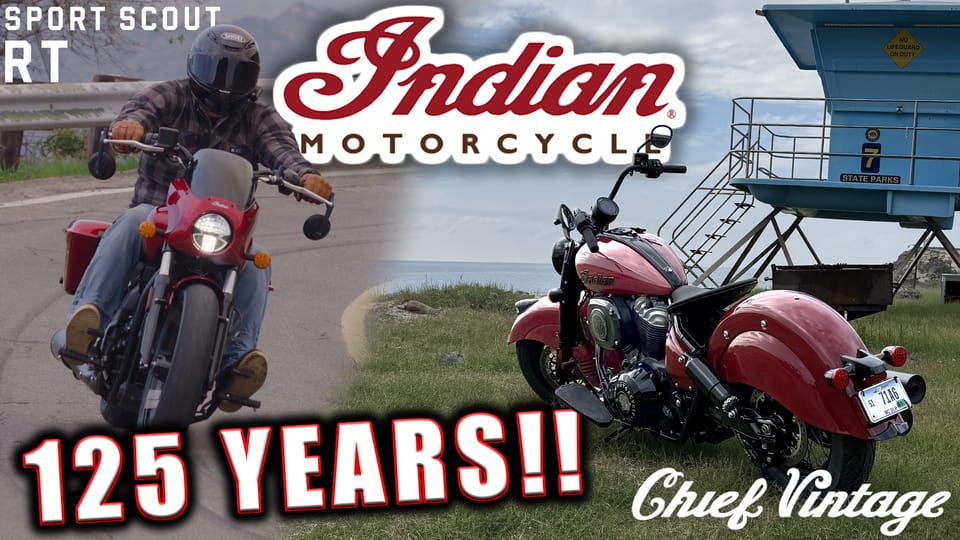
I love Harley-Davidson. I own one. I respect what they built and what they represent. But loving a brand does not mean ignoring nuance. Indian celebrating 125 years is not about pretending there were no hiatus years. It is about cultural continuity.
Harley’s history includes AMF ownership, executive buybacks, Reagan-era tariffs, and going public in 1986. From that point forward, leadership carried fiduciary responsibility to shareholders. Many riders tie loyalty to 3700 West Juneau Avenue as if the physical address itself defines authenticity. I understand the emotional pull of that building, and it absolutely deserves preservation as a historic landmark.
But using a corporate headquarters as proof of survival grit blurs history and buys marketing narratives. After 1986, that address was what it used to be, then became the headquarters of a publicly traded corporation leveraged in slide decks and earnings calls. The feeling of “The Motor Company” is powerful and Harley preserved that feeling brilliantly.
The reality is that legacy brands survive through reinvention, intervention, restructuring, public offerings, and cultural momentum. That is corporate America. Motorcycle culture belongs to riders, and it always has. You are not unique because of the logo on your tank. You are unique because you ride.
Maybe part of Indian’s current momentum is that some riders in 2026 are choosing product over inherited identity. That shift may be anti-Harley, it may be pro-rider, or it may be a mix of many factors. But there is real momentum, and while some may choose to ignore it in favor of staying comfortable with another brand, the growth is happening whether they acknowledge it or not.
Heritage in motorcycling is not measured by uninterrupted paperwork or a street address worn like a loyalty badge. It is measured by people. By the riders who kept showing up. By the communities that kept the culture alive, no matter who owned the logo.
What I Took Away
I did not leave that press conference thinking about capital structure. I left thinking about tone and future. Kennedy did not sound like someone flipping a brand. He said himself he would not even know how to do that. He sounded like someone stewarding it.
He talked about American manufacturing as identity. He talked about dealers as partners. He talked about differentiation over dilution.
Will execution match the tone? Time will tell.
But right now, Indian feels focused. Clear. Intentional.
And that makes the next few years very interesting.